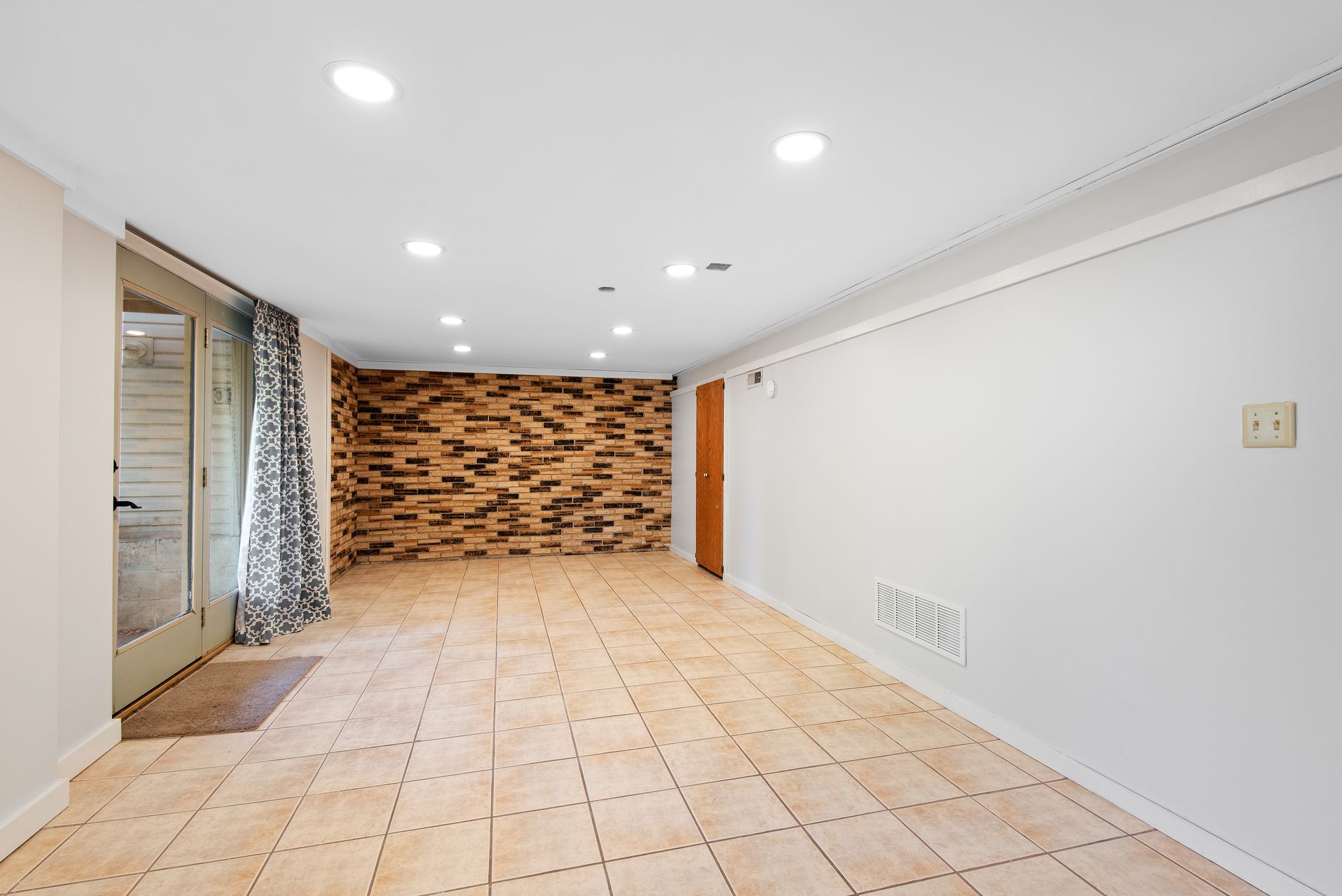
Tile and Porcelain Flooring in Ohio: Entryways Built for Road Salt
Ceramic leads everything that is not resilient flooring nationally, and in Ohio tile has one job it does better than anything else: surviving five months of salt, grit and meltwater tracked in through the front door.
Porcelain, ceramic, and why the distinction matters here
Both are fired clay, but porcelain is fired denser and absorbs less than 0.5% of its weight in
water. In an Ohio winter that is not a technicality. Water that soaks into a tile body and
then freezes is water that expands inside your floor, which is why porcelain is the correct answer
for an unheated mudroom, an enclosed porch, or a garage step, and why ceramic is perfectly fine in a
heated second-floor bathroom.
The other number worth asking about is the PEI rating, which describes surface wear. PEI 3 is a
normal residential floor; PEI 4 and 5 are what you want in the first ten feet inside an exterior
door, where the grit does its damage.
The problem that cracks tile in Ohio houses
Tile does not flex. Old floor framing does. Century-old joists deflect more than today’s code
allows, and a rigid tile installation laid over a floor that moves will crack — usually not
immediately, but two winters later, along a grout line, and the tile itself is rarely the fault.
The fix is not a better tile. It is a stiffer floor and an uncoupling membrane between the two,
and that has to be priced into the job before anyone chooses a color. A contractor who measures
deflection before quoting tile in an older house is telling you something useful about how they
work.
What tile costs in Ohio
Installed, tile runs roughly $9 to $14 a square foot in Ohio. Tile is
the material where labor genuinely dominates the bill — the tile itself might be a third of it. That
is why a mosaic, a herringbone layout, or a small room full of cuts costs so much more per square
foot than a big open floor in a 12×24 format.
An estimate, not a quote. These are planning ranges for Ohio, not a quote. What you actually pay depends on your rooms, your subfloor and the material you choose.
Add-ons that are not optional but often get left off a cheap quote: the uncoupling or crack
isolation membrane, backer board where the substrate needs it, and proper movement joints. A tile
job without movement joints in a room with a big temperature swing is a tile job with a crack in
its future.
Heated floors
Tile is cold. In an Ohio winter that is the one complaint people actually make about it,
and electric mat underfloor heating is genuinely worth considering in a bathroom or a mudroom while
the floor is already open. It is far cheaper to install during a tile job than to retrofit, and it
changes the room considerably.
Frequently asked questions
Can tile go over my existing vinyl floor?
Sometimes, if the vinyl is a single well-bonded layer over a sound substrate — but the safer and
more common answer is that it comes up first. If it is 9×9 tile, treat it as asbestos-containing
until a lab says otherwise and do not let anyone grind it.
Is large-format tile a bad idea in an old house?
It is less forgiving. A large tile spans more of a floor, so any dip in the substrate shows up as
lippage between tiles. Large format needs a flatter floor than small format does, and in an older
house that means more prep.
What grout should I use in an entryway?
Something that does not absorb road salt and meltwater. Modern high-performance cementitious
grouts and epoxy grouts both handle it; unsealed standard grout in an Ohio entryway will
discolor within a season.